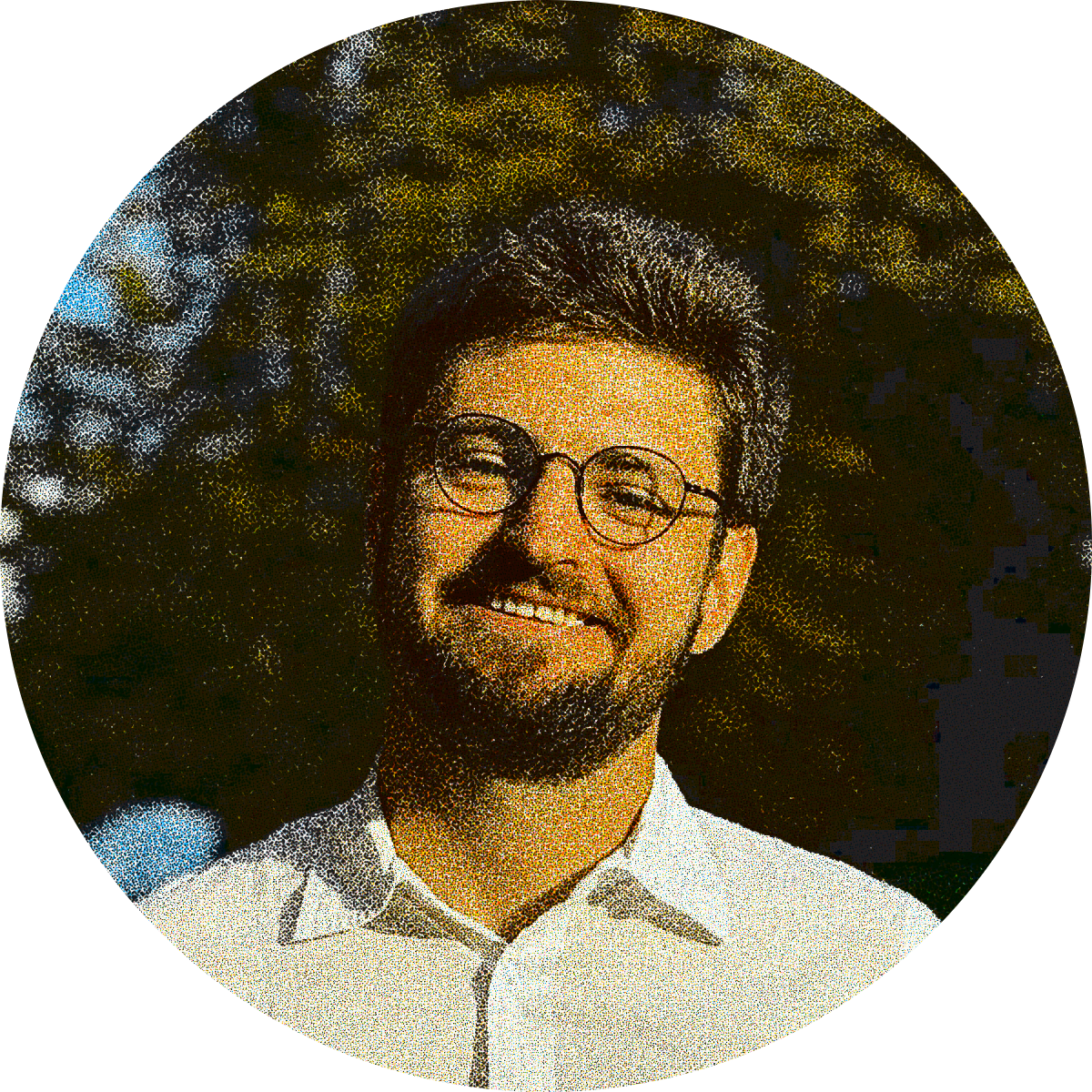
The last two and a half years have not been easy for me. A few months after my 27th birthday, I realized the life I was living was not mine.
I’d done well enough professionally. A few years earlier, I’d graduated from a fairly selective engineering school in France. From the outside, things looked fine. But different sources of discontent had been building for a while, and I had a stubborn belief that a real adult would deal with them alone. That belief led me straight into a wall.
I was burnt out. I could barely sleep two hours at night. When a doctor arrived at my home to set up sensors for a sleep apnea test, he told me he’d need at least two hours of data. That night, I rolled and tossed for hours, finally falling asleep around 7 a.m. and waking at 9:30. Just enough to rule out apnea.
Chronic stress was the real issue. Poor coping skills were.
I took a sick leave for about a year and worked with therapists the entire time. It helped rebuild my health. I slowly resumed work. But then other problems surfaced — family tensions, conflict with my girlfriend as we figured out how to share a living space, work deadlines closing in again. I remember coming home one evening to her crying about an argument from the day before, and all I could say was: I’m so tired. Can I be more receptive after some sleep?
In the months that followed, everything felt like constraint.
- I couldn’t stay up late: I had to sleep.
- I couldn’t pour everything into work: I had to exercise, do chores, handle paperwork, etc.
- I couldn't skip lunch or order comfort food: I had to eat healthy.
Every single thing felt like a duty I had to stumble through to earn a better life for myself.
Some days, I managed to frame it as opportunity, as an elaborate game. But on the days when too many things happened at once, there was no room left for that — it was just time for effort. Time to build.
Today all of this led me to ponder: when everything must be built at once, what happens to the person doing the building?
When you’re pushed into survival mode long enough, something insidious happens. You start to extrapolate the coping into a life philosophy. You tell yourself: I need to become harder. More disciplined. I need to approach everything with control. The joylessness stops feeling like a symptom and starts feeling like a strategy.
I had an intuition that this was wrong—that it was a short-term, dysfunctional reflex rather than genuine strength. And there’s a word for what I was doing. Brené Brown calls it armouring up: the set of defences we build against vulnerability. Foreboding joy—that habit of catastrophising every good moment. Perfectionism. Numbing. The cruel irony of armour is that you can’t selectively numb. When you close yourself off from pain, you lose access to joy, creativity, and real connection in the same stroke. The thing that protects you also imprisons you.
There is a biological dimension to this, too. Under chronic stress, the brain physically reshapes itself. The prefrontal cortex (where flexible thinking, planning, and emotional regulation live) shrinks, while the amygdala (the threat-detection centre) strengthens. Researchers call the cumulative wear and tear of this process allostatic load. The shift from reflective to reflexive. The neurobiology of hardening.
I could feel it happening. On my worst days, I noticed my thinking narrowing. I’d react rather than respond. I’d see every new responsibility not as something to be curious about, but as an aggression — something to be controlled, defeated, got through. I was becoming someone who could survive, but not someone who could live.
There’s a version of me from a few years ago that I miss sometimes. Not the circumstances: I don’t miss being less responsible, or being whiny and unaware. I miss the quality of his attention. He could linger. He could be surprised. He hadn’t yet learned to treat every unscheduled moment as a threat.
The psychoanalyst Donald Winnicott had a concept he called the true self and the false self. The true self is spontaneous, playful, creative—the part of you that acts from genuine impulse. The false self is the adaptation, the performance you construct to meet other people’s expectations. Winnicott believed that the capacity for play isn’t something you outgrow. It’s the foundation of psychological health at any age. When adults lose access to play, to that intermediate space between imagination and reality where creativity and meaning-making originate, they lose access to what’s most authentically theirs.
I think about this when I notice myself cutting things short. Rushing through a walk because there are messages to answer. Declining an invitation because there’s a feature to ship. Not because those things don’t matter (they do) but because I’ve started treating my struggle to keep up with life's challenges as a moral failing. That’s the false self at work. The armoured version, running things.
Stuart Brown, a psychiatrist who has spent decades studying play, puts it starkly: the opposite of play is not work, it’s depression. When we stop playing, he argues, we stop developing. The playful, curious, slightly unfinished quality that makes young people vital doesn’t become irrelevant with age. It becomes more necessary, because the pressures that would extinguish it only grow.
Here is the thing I’m slowly learning: staying soft is harder than hardening. It requires more strength, not less. It seems absurd: I still find hardening hard enough. But it's true.
Hardening is the easy response. It looks like maturity, like having it together. But it’s actually an anxiety-driven collapse into a narrower repertoire. The person who never asks for help, who controls everything, who treats life like a series of obstacles to be defeated — that person is not resilient. Resilience is defined by flexibility, not rigidity. And flexibility means staying open when every instinct says to close.
Some days the tension between building and remaining whole feels unbearable. There are evenings when I’m too tired to be kind, too stressed to be curious, and the only version of myself that feels available is the grim, efficient one. But I’ve begun to notice that even on those days, small things can break through. A conversation that turns funny. A walk that goes longer than planned. A moment of genuine surprise. These aren’t luxuries to be earned after the hard work is done. They’re what keeps the hard work from destroying its own purpose.
Rilke, writing to a young poet over a century ago, offered a piece of advice I’m not sure I've learned yet. He urged his correspondent to have patience with everything unresolved in his heart—to try to love the questions themselves, rather than searching for answers that couldn’t yet be given. He compared the process to a tree that does not force its sap, standing confidently through the storms of spring without fearing that summer might not follow.
It does come, Rilke wrote. But it comes only to the patient.
I am not patient by nature. I want to have built the life already, to be done with the stumbling. But I think the real task of early adulthood isn’t to arrive. It’s to keep building without letting the building calcify the builder. To stay soft enough to feel the difficulty—and to feel everything else, too. The humour, the absurdity, the tenderness, the surprise.
I am trying to let the questions live in me. I am trying not to force the sap.
On the Challenges of Early Adulthood
Or: how to build a life without letting the effort harden you